Camera Calibration and NeRFStudio Pipeline
Python pipeline that calibrates a camera from an ArUco board, estimates poses, and converts them into the transforms NeRFStudio expects for 3D reconstruction.
- Stack
- PythonOpenCVArUcoNumPyNeRFStudio
Problem
Neural reconstruction methods only work if they are told accurately where each photograph was taken from. Getting there means calibrating the camera’s intrinsics, estimating a pose per image, and then expressing all of it in the convention the reconstruction tool expects. Small errors in that chain show up as visible artefacts later.
Approach
The pipeline detects ArUco markers with OpenCV against a custom board whose 3D
marker coordinates are known, calibrates the camera intrinsics, and estimates
poses using Zhang-style planar calibration geometry. It then converts poses from
OpenCV’s convention to OpenGL’s, which is what NeRFStudio expects, and writes a
compatible transforms.json.
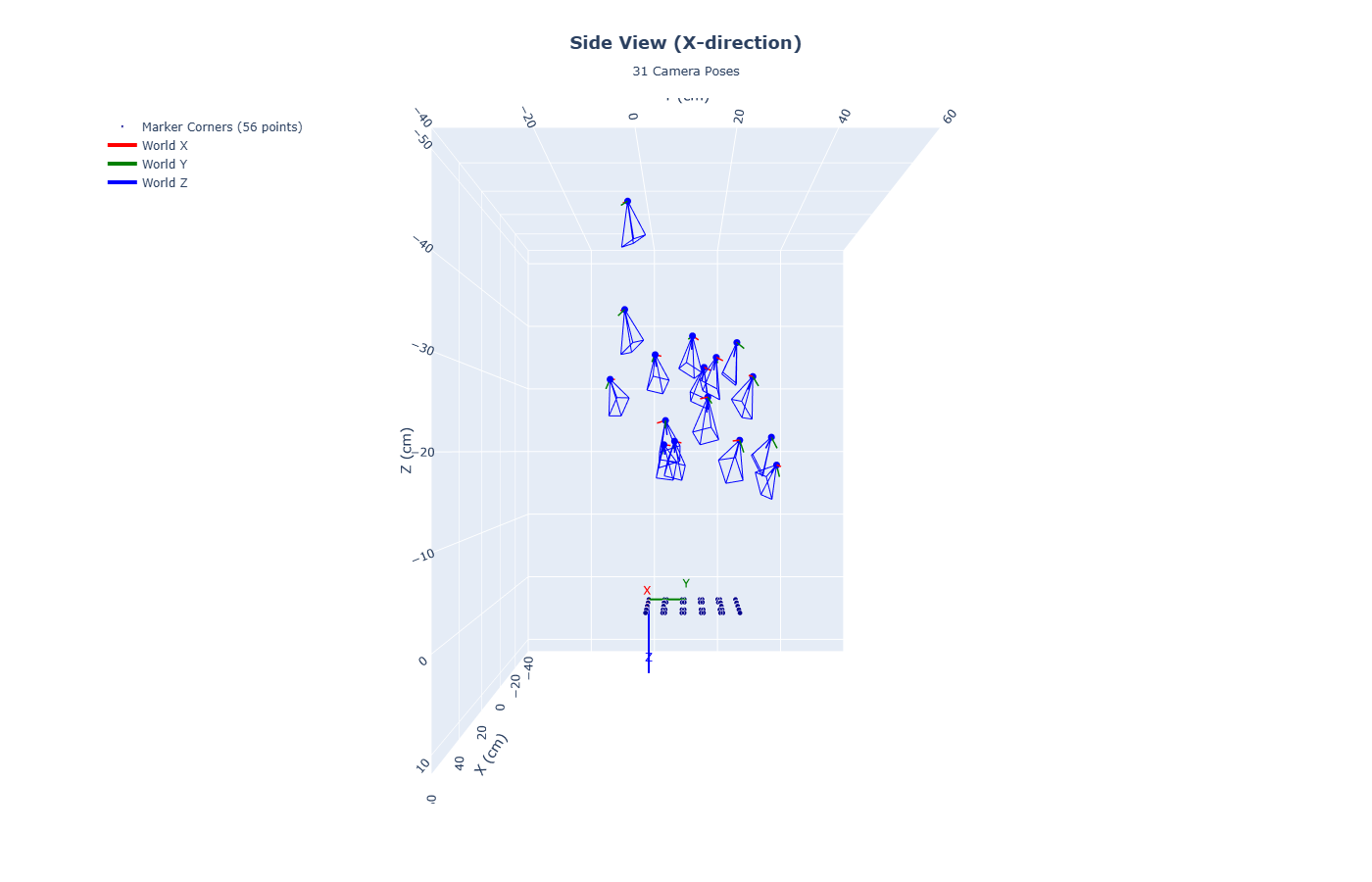
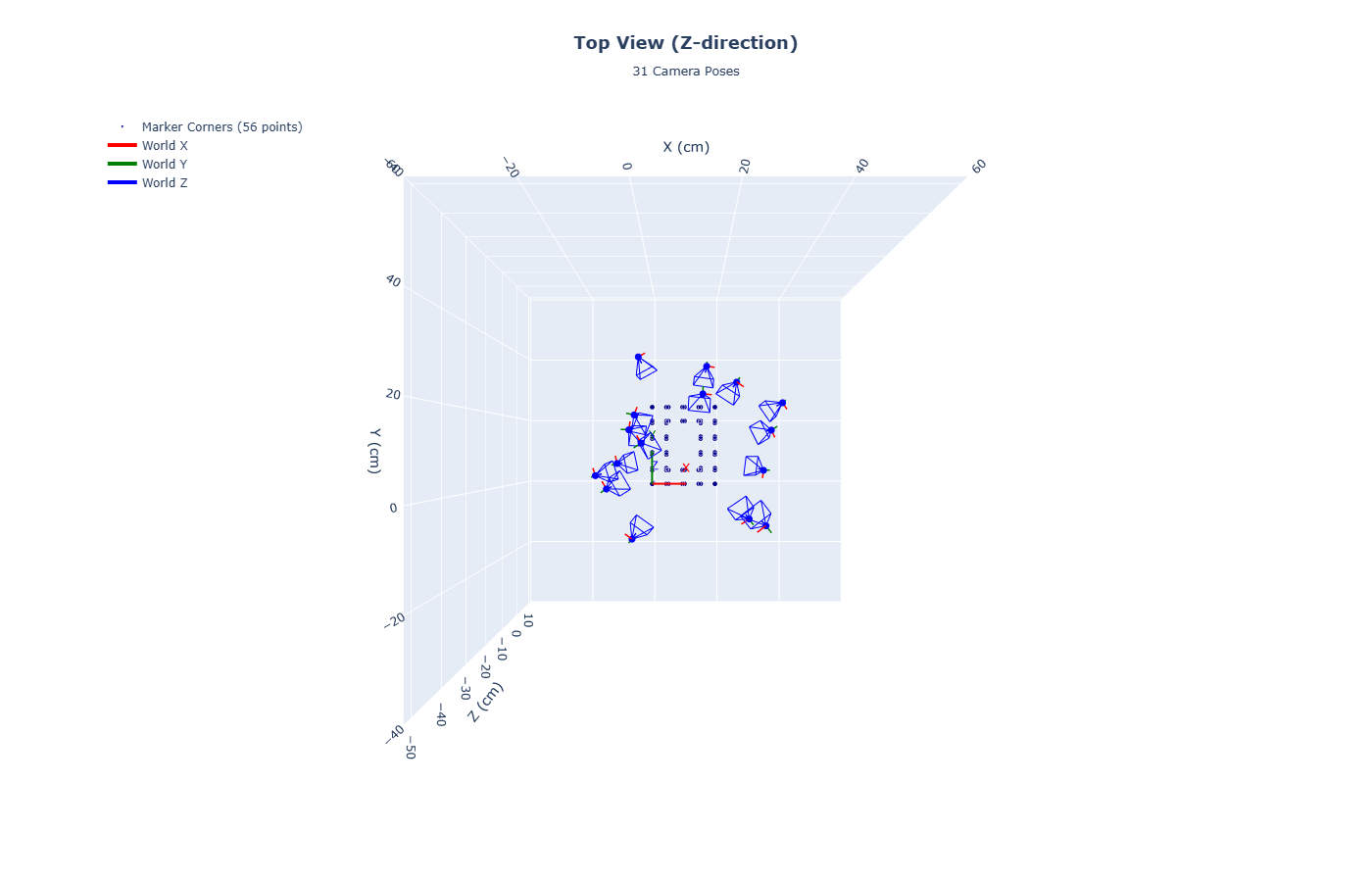
The conversion step is the one that quietly breaks reconstructions when it is wrong, so the pipeline also renders static and interactive pose visualizations. Seeing the camera positions laid out in space is the fastest way to catch a flipped axis before spending time on a reconstruction.
Data
Raw calibration image folders are not published, since they are large and add nothing to a code review. The repository ships derived outputs and the pose visualizations; a full run expects local calibration images.